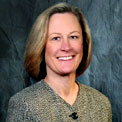
Minnie Hines-Chen
Living and loving every day

"Women your age don't get breast cancer," someone told Minnie Hines-Chen when she found a lump in her breast during her first year of college. But at the end of her second year, she was diagnosed with the disease. And just a few weeks later, she was accepted into nursing school.
Determined not to waste energy on anger, fear, or resentment, Minnie chose to have a bilateral mastectomy and an intense chemotherapy regimen so she could get back on track with schooling as soon as possible. "There was only room for one enemy in this battle," she says, "and I knew I needed all my strength to conquer it."
"Being only 20 years old, all the breast cancer survivors I met were older. But it was nice," she says, "because I had strong ladies to look up to, and our shared experience opened up doors and relationships that I never knew existed."
Minnie also had good friends keeping her busy, and her strong will helped her mom keep the faith that her daughter would make it through.
I’m here and able
and that’s what
matters most.
As soon as she was able, Minnie began telling her story and educating others about her experience. She began speaking at conferences and became a Reach to Recovery volunteer to encourage newly diagnosed patients.
Minnie says that she still deals with the stigma associated with cancer. "So many people are uneducated about the disease and the wonderful people who are fighting it every day," she says. "I'm glad I can bring wisdom to those around me. I still have scars from my chemo port, mastectomy, and reconstruction. But I'm here and able, and that's what matters most."
Minnie reached her goal of becoming a nurse and always keeps her positive attitude, despite the long-term effects of her cancer treatment. "I have to take tamoxifen daily, get monthly injections, and am in artificial menopause," she explains. "I can't have children, which puts a damper on my dreams. But until I learn what God has planned for me, I will keep serving others with compassion, laughing with my friends and family, and living for this moment every day."
Gary Bonacker
Biking for life

"I love life and do everything I can to live each day better than the day before. I know I sound like a greeting card," Gary Bonacker says, "but it's a good way to live."
In the spring of 2003, Gary was diagnosed with a stage 2 brain tumor. But just 10 months after surgery that removed only half of the tumor, Gary rode alongside Lance Armstrong at the Ride for the Roses cycling event in Austin, Texas.
"It was something I'll remember for the rest of my life," Gary says. It inspired him to go home to Bend, Oregon, and start his own cycling event to raise money for cancer. The Tour des Chutes  has grown from 750 riders in 2005 to over 1,100 riders for the 2010 ride. The money raised during the event helps fund the cancer survivorship program at St. Charles Cancer Center, which provides medical care for many of the cancer patients in Bend and other nearby communities.
has grown from 750 riders in 2005 to over 1,100 riders for the 2010 ride. The money raised during the event helps fund the cancer survivorship program at St. Charles Cancer Center, which provides medical care for many of the cancer patients in Bend and other nearby communities.
The years since have not been easy. Gary was diagnosed with his brain tumor in 2003, and he still battles it every day. He requires ongoing treatment to slow the growth of the tumor and is on anti-seizure medicines. With fatigue and multiple health problems, he has had to limit his work a great deal.
It took cancer to make me look at my life and how
I should live it.
"There's not a day that I don't go into a dark place, thinking about things I might miss," he says. "But my family, workplace, and friends, and my event help me through it. My other coping strategy is to read about research and learn everything that I can about my disease. I've surprised doctors with information they weren't even aware of.
"I have heard people with cancer say it is a gift," he jokes. "Well, I would take that gift back, if possible."
Gary continues to do his best and move on with his life. Besides planning his annual fundraiser, he says that spending time with his family, gardening, and fishing are his best coping strategies. And, of course, cycling.
"What's sad is that it took getting cancer to make me look at my life and how I should live it," Gary says. "We take a lot for granted. But I don't any longer."
Matthew Zachary
Composing a support network for young adults

Matthew Zachary started playing piano at age 11. He wanted to be a Hollywood composer and studied music in college. But in 1995, when Matt was a senior, he began losing motor coordination in his left hand and had to give up his musical ambitions. A massive tumor that generally occurs in children under the age of 6 was found in his brain.
Matt had brain surgery and extensive radiation but refused chemotherapy because he wanted to be able to continue to play the piano. One of the drugs he was offered would have caused peripheral neuropathy, a side effect he wasn’t willing to endure for the rest of his life. Music was his anchor, and he made every effort to sit down at the piano and play, even if only just for minutes a day.
"In spite of losing the ability to use my left hand, music was a grounding force in a sea of chaos," he says. "It was the only thing I had control over, and it made me happy."
Cancer gave me the confidence to take risks,
and the belief that I could accomplish anything.
But, once he finished treatment, he felt jaded and angry. There were no support groups or internet resources for people like him, cancer survivors in their 20s. And at the time, the word survivorshipdidn't really exist within the oncology community. After surgery and treatments, the doctors gave him little guidance or planning for what to do next in life.
"I know all about that isolation and fear. The feeling of, 'What am I going to do for the rest of my life?'" he says. "I had lots of love and support from my friends and family, but I was desperate for peer support from other young adult patients and survivors who could relate to exactly what I was going through."
As timing would have it, after making a career in advertising, Matt recorded a CD of his own compositions to help him heal and put closure to his cancer. Through a series of events, the project evolved into his becoming an advocate and spokesman for young adults with cancer. Now his organization, the I’m Too Young For This! Cancer Foundation , helps people in their 20s and 30s who have the disease get the support and information he felt he didn’t have. He is also passionate about calling attention to the lack of clinical research in this population.
, helps people in their 20s and 30s who have the disease get the support and information he felt he didn’t have. He is also passionate about calling attention to the lack of clinical research in this population.
"Cancer made me a better person," he explains, "in that it gave me permission to live life to the fullest, the confidence to take risks, and the belief that I could accomplish anything."
Mark Ciccarelli
Connecting people to people

Mark Ciccarelli was diagnosed with Hodgkin disease when he was 9 years old and just about to enter the fourth grade. He did his best to pretend it wasn't that bad, forcing a smile and imagining a time when he'd be cancer free.
Mark missed a lot of school that year, because of the chemotherapy and then the radiation. But he took part in as many activities as he could. There were times when he'd go outside and play kickball hooked up to a catheter in his chest—partly to feel like a normal kid again and partly to reassure his family and friends that he was alright.
Now Mark is 26 years old and cancer free, and he works as a financial advisor. He recalls that when he was going through cancer treatment as a kid, although he couldn't know all the specifics of his cancer, he did know that he had to endure and find strength in every way possible.
Today he credits his support system in helping him do that.
There’s nothing better
than being able
to help others.
"I looked at cancer as a team sport; on my own I would never win, but if I opened up to the positivity of others around me, I knew I would have a fighting chance," he says. "While every day brought on new challenges, both mentally and physically, I always felt love and support from my family, friends, and classmates. Those were the key factors that helped me get through my cancer diagnosis."
Mark also realized how helpful it was to connect with someone who was having a similar experience. "It gives you a lot more strength to talk to someone who understands what you're going through firsthand," he says. "As a 9 year old with hair falling out and constant nausea from medication, I had a really hard time understanding why I was sick. It caused me to be quite shy. I finally felt better when a family friend who had cancer sat me down and spoke to me about our shared experiences. Then I didn't feel like I was the only one."
Mark now helps other cancer survivors make these kinds of helpful connections through Conquer Together , an interactive Web site that he created. The site allows cancer survivors, family members, and caregivers from around the world to share their experiences, reasons for hope, and other messages of encouragement. The site has hundreds of members and gets thousands of hits a day.
, an interactive Web site that he created. The site allows cancer survivors, family members, and caregivers from around the world to share their experiences, reasons for hope, and other messages of encouragement. The site has hundreds of members and gets thousands of hits a day.
"I understand that I'm very fortunate to be here doing what I'm doing," Mark says. "There's nothing better than being able to help others."
Staci Wright
Helping kids regain their self image

Staci Wright was in the eighth grade when she began having terrible headaches. The 13-year-old girl had been healthy, happy, and active all her life, playing soccer since kindergarten. But life changed overnight when she was diagnosed with Ewing sarcoma, a type of bone cancer, in her skull.
The treatment was 10 months of chemotherapy, along with 5 weeks of radiation. "For me, the hardest part of the cancer battle was that my pain was hurting my whole family," she recalls. "It put so much stress on my parents and older brother. Luckily my sister was too young to really realize what was going on."
During it all, she tried to stay positive and upbeat, doing her best to live life as a normal kid. The support of her family and friends helped her get through many painful times during the year. But even so, there were days when she felt overwhelmed.
"Sometimes it felt like I was all by myself in this battle," she says. "I realized others couldn't fathom what I was going through, and so there were times when I just wanted to be left alone."
Hair loss from chemotherapy isn't easy for any patient. But for a teenage girl, it can be devastating. Staci felt sad and depressed with losing her hair and didn't want to go to school. "I had a really hard time with my hair loss. But there was nothing I could do about it except move on to more important things, like surviving," she says. Unfortunately Katie's radiation killed all the hair cells on a patch of skin on the back of her head, causing her hair loss to be permanent.
Fortunately her mother, Debbie, learned of a hair system that stays in place, made of real hair attached to material that looks like a scalp. Staci loved her new hair but was concerned about the other kids she met at the children's hospital who were still dealing with baldness. "It's tough for people my age to lose their hair," she says. "They lose their self-esteem with it."
Life is something
that can’t be
taken for granted.
That's when Staci and Debbie decided to do something to help these kids. They established the Angel Hair Foundation , a non-profit organization that purchases hair systems for kids and teens. Through hard work and getting the word out, the foundation is thriving and helping kids with cancer everywhere feel better about losing their hair.
Staci is now doing well, playing soccer, hanging out with her friends, and attending the University of Oregon. She believes she'll always have insecurities about her permanent hair loss but trusts that she'll know how to deal with them when they arise. She's excited about what life has to bring to her and plans to become a dietician. More important, she knows that true friends will love her no matter what her hair looks like.
"To me, life is something that can't be taken for granted. I can't be that little shy girl that doesn't push the limit every once in a while," she says. "I often think about how cancer affected my life, about how I developed as a person through this experience. Cancer made me realize what is important in life and made me the more mature person I am today. Carpé diem!"
The causes of cancer are diverse, complex, and only partially understood. Many things are known to increase the risk of cancer, including tobacco use, dietary factors, exposure to radiation, lack of physical activity, obesity, and environmental pollutants. These factors can directly damage genes or combine with existing genetic faults within cells to cause cancerous mutations.So Be healthy,smart,and cautious. There are many downfalls.So Before you Judge,Watch your own self.